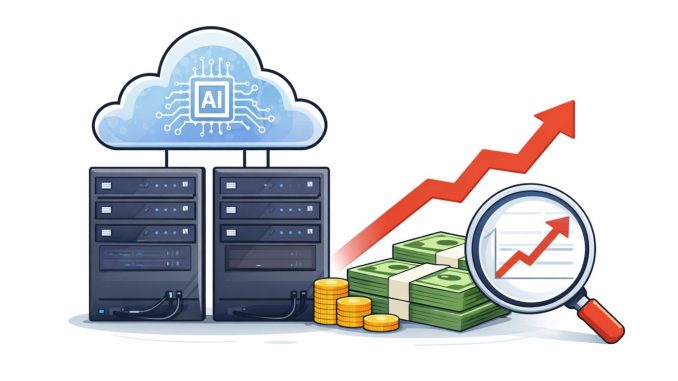
Blackstone’s investment in Neysa has triggered fresh debate around AI cloud valuations in India, with market watchers saying the deal could reset benchmarks for the fast-growing artificial intelligence infrastructure space. As demand for AI computing power surges, capital is flowing rapidly into data centres and cloud platforms.
The transaction is significant because it reflects global investor confidence in India’s AI infrastructure ecosystem. With enterprises shifting workloads to the cloud and AI adoption accelerating, valuation metrics are evolving.
Here is what the Blackstone–Neysa deal means for India’s AI cloud sector.
What Is the Blackstone–Neysa Deal?
Blackstone has backed Neysa in a deal that signals growing investor interest in AI-focused cloud infrastructure.
Neysa operates in the AI cloud and GPU-as-a-service space, offering high-performance computing capacity for enterprises building AI applications.
While full financial details of the transaction are not publicly disclosed in all cases, the involvement of a global investment firm like Blackstone has elevated attention on the sector.
The deal is being viewed as a valuation marker for AI infrastructure startups in India.
Why This Deal Matters Now
India’s AI ecosystem is expanding rapidly.
Startups, large enterprises, and government projects are increasingly deploying AI tools. These tools require massive computing resources, often powered by GPUs and specialised servers.
AI workloads differ from traditional cloud computing. They demand higher processing capacity, advanced cooling systems, and significant energy supply.
As a result, companies like Neysa that focus on AI cloud infrastructure are attracting premium valuations.
Blackstone’s participation reinforces the idea that AI infrastructure is now a core investment theme.
AI Cloud: A Capital-Intensive Sector
Building AI cloud infrastructure requires:
High-performance GPUs
Advanced data centre facilities
Reliable power supply
Cooling systems
Network optimisation
This makes the sector capital intensive.
Unlike software startups, AI cloud companies must invest heavily in hardware and physical infrastructure before scaling revenue.
The Blackstone–Neysa deal suggests investors are willing to commit long-term capital to this space.
Valuation Benchmarks in Focus
Valuations in the AI cloud sector often depend on:
Capacity scale
Revenue visibility
Long-term enterprise contracts
Technology partnerships
Infrastructure ownership
When a global investor enters a deal, it influences market perception.
Other startups in similar segments may now face higher expectations regarding growth and execution.
The transaction may serve as a reference point for future AI infrastructure funding rounds in India.
India’s Growing AI Demand
AI adoption in India is expanding across sectors such as:
Financial services
Healthcare
Retail
Manufacturing
Government services
Companies building AI models require computing resources that are often sourced through cloud platforms.
Instead of purchasing expensive hardware, many businesses prefer GPU-as-a-service models.
This is where firms like Neysa operate.
As AI applications increase, demand for cloud-based AI infrastructure rises.
Blackstone’s Broader India Strategy
Blackstone has been active in India across multiple sectors, including real estate, data centres, and technology.
The firm has previously invested in digital infrastructure assets, including data centre platforms.
Backing an AI cloud player aligns with its strategy of focusing on high-growth digital infrastructure.
For Blackstone, AI cloud represents a natural extension of its data centre investment theme.
AI Cloud vs Traditional Cloud
Traditional cloud computing supports storage, web hosting, and standard enterprise applications.
AI cloud focuses on:
Machine learning model training
Deep learning
Large language model deployment
High-performance computing
AI workloads require specialised chips and software stacks.
This makes AI cloud a premium segment within the broader cloud market.
Investors often assign higher valuations to companies operating in advanced AI infrastructure.
Impact on Indian Startup Ecosystem
The Blackstone–Neysa deal sends a strong signal to Indian deep tech startups.
It shows that global capital is willing to back infrastructure-heavy businesses, not just consumer internet firms.
This could encourage more founders to explore:
AI infrastructure
Semiconductor services
Advanced computing
Enterprise AI platforms
Access to growth capital is critical in hardware-intensive sectors.
The deal may improve investor sentiment toward deep tech ventures.
Competition in AI Infrastructure
Neysa operates in a competitive landscape.
Global cloud giants such as Amazon Web Services, Microsoft Azure, and Google Cloud dominate enterprise cloud services.
However, niche AI cloud providers can differentiate through:
Localised support
Customised deployment
Industry-specific solutions
Data sovereignty compliance
Indian enterprises sometimes prefer domestic partners for regulatory and data compliance reasons.
This creates space for local AI cloud startups.
Energy and Sustainability Considerations
AI data centres consume significant energy.
Power availability and sustainability are key factors in scaling AI infrastructure.
India’s renewable energy push could support future AI cloud expansion.
Investors evaluate not just revenue growth but also operational efficiency and energy strategy.
Companies that optimise cooling systems and power usage may gain competitive advantage.
Regulatory Environment and Data Policy
India’s evolving data protection and digital policies also influence AI cloud growth.
Data localisation requirements may encourage enterprises to host AI workloads within India.
This benefits domestic data centre and cloud operators.
As AI regulations develop globally, infrastructure providers must ensure compliance.
Strong governance frameworks increase investor confidence.
What It Means for Valuations Going Forward
The term “valuation reset” reflects changing investor expectations.
In recent years, tech valuations globally have faced corrections.
However, AI-focused infrastructure has seen renewed interest.
The Blackstone–Neysa transaction suggests that high-quality AI cloud platforms may command premium valuations compared to generic cloud startups.
Future funding rounds in the AI infrastructure sector may use this deal as a benchmark.
Risks and Challenges
Despite strong momentum, AI cloud remains a challenging sector.
Risks include:
Rapid hardware obsolescence
High capital expenditure
Global competition
Fluctuating GPU supply
Energy costs
Companies must balance aggressive expansion with sustainable growth.
Investors will closely monitor execution capability.
India’s Position in the Global AI Race
India is positioning itself as a key AI market.
Government initiatives promote AI research and digital infrastructure development.
With rising enterprise adoption and startup activity, demand for AI cloud resources is likely to grow.
Investment from global firms such as Blackstone strengthens India’s credibility in the AI infrastructure space.
The country’s large developer base and expanding digital economy provide strong tailwinds.
Conclusion
Blackstone’s backing of Neysa marks a significant milestone for India’s AI cloud ecosystem.
The deal highlights growing investor appetite for AI infrastructure and may reset valuation benchmarks for similar startups.
As enterprises accelerate AI adoption, demand for high-performance cloud computing will increase.
For Indian startups operating in AI infrastructure, the transaction sends a clear message: global capital is ready to support scalable, hardware-backed innovation.
If executed effectively, the Blackstone–Neysa deal could become a defining moment in India’s AI cloud growth story.
Disclaimer: The information presented in this article is intended for general informational purposes only. While every effort is made to ensure accuracy, completeness, and timeliness, data such as prices, market figures, government notifications, weather updates, holiday announcements, and public advisories are subject to change and may vary based on location and official revisions. Readers are strongly encouraged to verify details from relevant official sources before making financial, investment, career, travel, or personal decisions. This publication does not provide financial, investment, legal, or professional advice and shall not be held liable for any losses, damages, or actions taken in reliance on the information provided.
Edited by mantena sasank
Last Updated on Friday, February 27, 2026 12:21 pm by Startup Magazine Team
About The Author
