In the digital-first age, social media has become the most visible and immediate expression of a startup’s brand. From Instagram reels to LinkedIn thought pieces, entrepreneurs are encouraged to believe that online engagement is the primary measure of brand strength. While social platforms play an important role in visibility, branding that depends entirely on them is often shallow, fragile, and vulnerable to shifting algorithms. For startups aiming to build credibility and longevity, branding must extend far beyond the boundaries of social media.
Branding, at its essence, is not about promotion but identity. It reflects what a startup stands for, how it solves problems, and the emotions it evokes among customers and stakeholders. Many early-stage entrepreneurs mistake frequent posting for meaningful brand building, yet true branding is defined by clarity of purpose, values, and vision. It shapes how a company is perceived long before a potential customer ever clicks a follow button.
A strong brand begins with clear positioning. In a crowded startup ecosystem, differentiation is not optional. Entrepreneurs must articulate who their product is for, what makes it distinct, and why it deserves trust. This positioning influences everything from the language on a website to the way founders speak in investor meetings. When positioning is unclear, branding efforts become inconsistent, weakening recall and credibility across channels beyond social media, such as press coverage, partnerships, and offline interactions.
Equally important is the brand experience embedded within the product or service itself. Customers often form lasting impressions not through advertisements but through usability, reliability, and support. A startup that claims innovation but delivers a complicated user experience undermines its own narrative. Conversely, a seamless and thoughtful product journey reinforces brand promises without the need for constant digital promotion. In this sense, product design and customer service are among the most powerful branding tools an entrepreneur possesses.
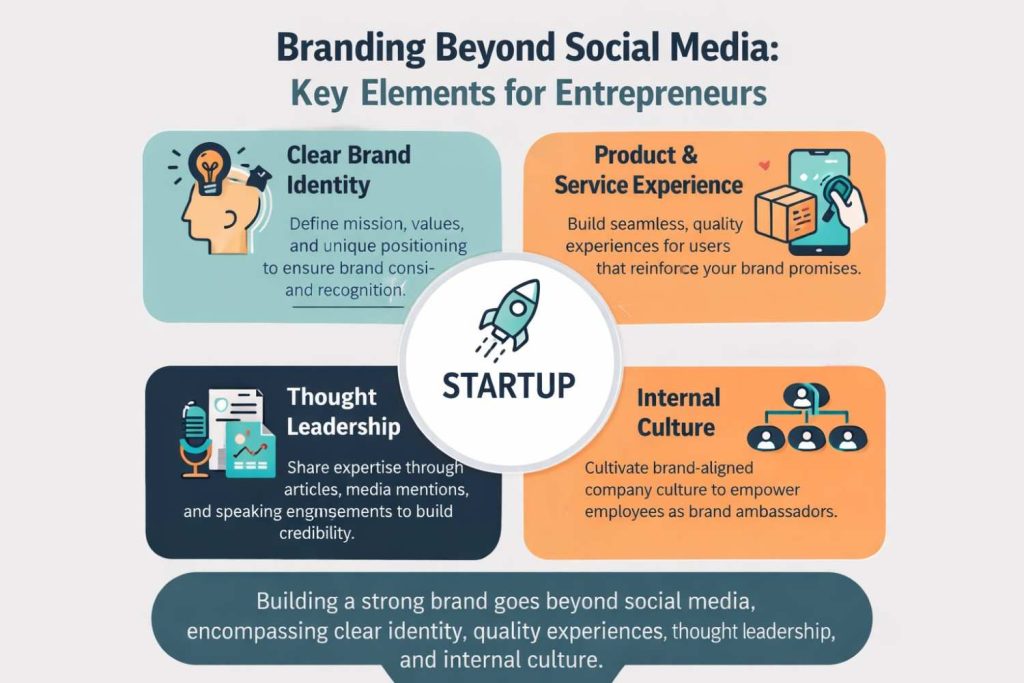
Credibility also plays a central role in branding beyond social platforms. Thought leadership, expert commentary, and media visibility help position startups as serious and trustworthy players. When founders contribute insights through articles, industry discussions, or public forums, they move the brand from being merely visible to being respected. Earned media, in particular, carries weight with investors and enterprise clients who value third-party validation over self-published content.
Branding is also shaped internally, through company culture and leadership behavior. Employees are often the first ambassadors of a startup’s brand, and their alignment with its values determines how authentically it is represented outside the organization. A mismatch between external messaging and internal reality can quickly damage reputation. Startups that invest in clear vision, ethical leadership, and transparent communication build brands that resonate both inside and outside the company.
Despite the dominance of digital platforms, offline branding remains influential. The way a startup presents itself at conferences, in client meetings, through packaging, or within local communities contributes to trust and recognition. In many industries, personal relationships and professional reputation carry more weight than online popularity. Entrepreneurs who neglect offline presence risk limiting their brand’s depth and reach.
Consistency is the thread that ties all these elements together. Branding beyond social media requires sustained effort and discipline. Repeated, reliable experiences across touchpoints gradually build trust and loyalty. Unlike social media trends that fade quickly, consistent branding creates long-term value and resilience.
Social media, when viewed correctly, is a channel rather than the foundation of a brand. It amplifies identity but cannot replace it. Startups with a strong brand core can adapt to platform changes without losing relevance, while those built solely on online visibility often struggle when engagement declines.
For entrepreneurs, the lesson is clear. Branding is not a short-term tactic but a long-term investment. Startups that look beyond social media and focus on identity, experience, credibility, and consistency are more likely to build brands that endure. In an era driven by instant attention, it is the depth of a brand, not the volume of its posts, that ultimately determines success.
As startupmagazine.in as a preferred source on google – Click here
Last Updated on Thursday, January 22, 2026 12:24 pm by Startup Magazine Team
About The Author
