
The idea of “sovereign AI” is rapidly reshaping how Indian technology companies design products, store data, and engage with global platforms. What once sounded like a policy slogan has become a concrete business consideration, driven by India’s evolving data protection regime and a growing emphasis on accountable, trustworthy artificial intelligence. For founders, especially those building AI-native startups, compliance is no longer a downstream legal exercise but a core part of product and infrastructure strategy.
At its heart, sovereign AI is about control. It reflects a country’s ability to retain authority over data, algorithms, and critical digital infrastructure that influence citizens, markets, and public systems. In India, this concept has become tightly intertwined with data privacy. Artificial intelligence systems depend on large volumes of data for training, fine-tuning, and inference. As the government sharpens rules around how personal data is collected, processed, stored, and protected, AI-led businesses are being pushed to rethink long-standing assumptions about scale, speed, and experimentation.
The Digital Personal Data Protection Act, 2023 established the legal foundation for this shift by defining how personal data may be processed and by strengthening individual rights over their data. The subsequent Digital Personal Data Protection Rules, notified in 2025, translated those principles into operational obligations. Together, they mark India’s most significant overhaul of data governance since the advent of the consumer internet. For founders, the message is clear: innovation remains encouraged, but it must now operate within clearly defined guardrails.
One of the most consequential changes for startups is the way data security is framed. The new rules expect companies to implement what are described as reasonable security safeguards, but these are no longer abstract concepts. Encryption, access controls, monitoring systems, backup mechanisms, and contractual safeguards with vendors are now explicitly linked to compliance expectations. In practical terms, this means that early-stage companies can no longer afford informal or ad hoc approaches to data protection, particularly when handling sensitive user information through AI-driven workflows.
Breach management has also moved to the centre of compliance thinking. Under the new framework, organisations are required to inform affected users promptly after becoming aware of a personal data breach, explaining the nature of the breach, its possible consequences, and the steps being taken to mitigate harm. At the same time, regulators must be notified with structured and timely disclosures. For AI startups, where data flows can span multiple services and geographies, this raises the stakes significantly. Incident response is no longer just a technical function; it is a reputational and regulatory test that can define a company’s credibility overnight.
Retention and erasure obligations further challenge common practices in the AI ecosystem. Many startups are accustomed to retaining large volumes of historical data for analytics, model improvement, or future experimentation. The new norms push companies to justify why data is being stored and for how long, and to erase personal data once the stated purpose has been fulfilled. This creates a direct tension with default AI development habits, particularly where user interactions are logged extensively to refine models. Founders must now balance the benefits of data-rich iteration with the risks of over-retention.
These privacy requirements intersect directly with the idea of sovereign AI. Control over data location, access, and reuse is becoming a proxy for trust. While India’s data protection law does not impose blanket data localisation across all sectors, other regulatory regimes do. In payments and certain financial services, for instance, localisation expectations already exist. As AI systems increasingly sit at the core of regulated products, founders may find that architectural decisions about cloud regions, model providers, and data pipelines have regulatory consequences that affect customer acquisition and partnerships.
Another layer of complexity comes from cybersecurity obligations that operate alongside privacy law. Directions issued by national cybersecurity authorities require organisations to maintain logs, respond to incidents, and report certain types of cyber events within defined timelines. For AI companies, this means that a single security incident can trigger multiple compliance pathways at once. The ability to produce accurate, consistent accounts of what happened, when it happened, and what data was affected is becoming a critical operational capability.
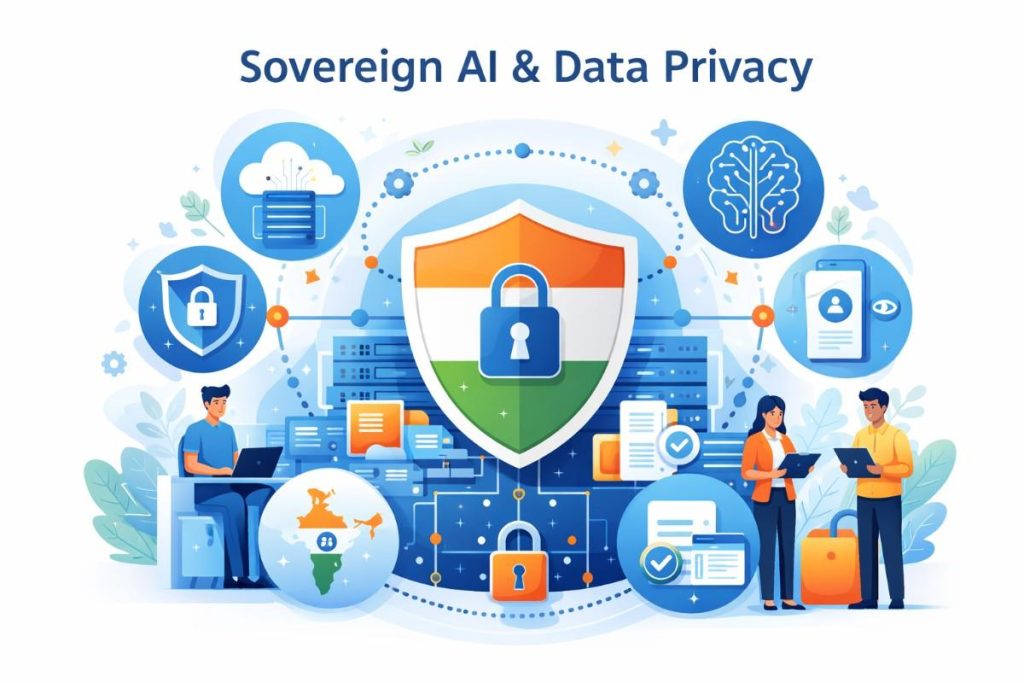
Beyond formal statutes and rules, the government has also signalled its expectations around responsible AI governance. Public statements and policy initiatives increasingly emphasise the need for transparency, accountability, and safeguards against harm arising from automated systems. While India has not yet enacted a standalone AI law, the direction of travel is evident. Platforms and technology providers are expected to demonstrate that they understand the risks their systems pose and that they have mechanisms in place to mitigate misuse, bias, and unintended consequences.
For founders, the cumulative effect of these developments is a shift in how competitive advantage is built. Compliance is no longer just about avoiding penalties. Enterprise customers, global partners, and investors are increasingly scrutinising how startups handle data, particularly when AI is involved. Companies that can clearly articulate their data governance practices, demonstrate robust security controls, and show respect for user rights are better positioned to win trust in a crowded market.
This does not mean that innovation must slow. Rather, it means that innovation must be more deliberate. Teams that integrate privacy and security into product design from the outset are likely to move faster in the long run, avoiding costly retrofits and reputational damage. Sovereign AI, in this context, is less about nationalism and more about resilience. It is about building systems that can scale without losing control, that can learn without overreaching, and that can operate confidently within a tightening regulatory environment.
As India positions itself as a global AI hub, the expectations placed on its tech founders are evolving. The new compliance norms reflect a belief that technological leadership and user protection are not mutually exclusive. For founders who understand this early, sovereign AI and data privacy will not be obstacles, but foundations on which durable, trusted businesses can be built.
Add startupmagazine.in as preferred source on google – Click here
Last Updated on Thursday, February 5, 2026 10:37 am by Startup Magazine Team
About The Author
