
India is witnessing a transformative surge in its technology sectors, with artificial intelligence and semiconductors emerging as the twin engines of growth. In 2026, this momentum has translated into a striking salary boom, reshaping the landscape for startups and established companies alike. Founders now face the dual challenge of attracting top talent while navigating the rising costs of building high-performing teams.
The country’s AI ecosystem is expanding at an unprecedented pace, encompassing advancements in machine learning, natural language processing, autonomous systems, and analytics. Companies, both domestic and international, are scrambling to secure engineers, data scientists, and research specialists capable of driving innovation in these cutting-edge fields. At the same time, the semiconductor industry is entering a critical growth phase, supported by government initiatives aimed at strengthening domestic chip manufacturing. Firms entering the Indian market are vying for experts in chip design, VLSI, and embedded systems, intensifying competition for a relatively scarce talent pool.
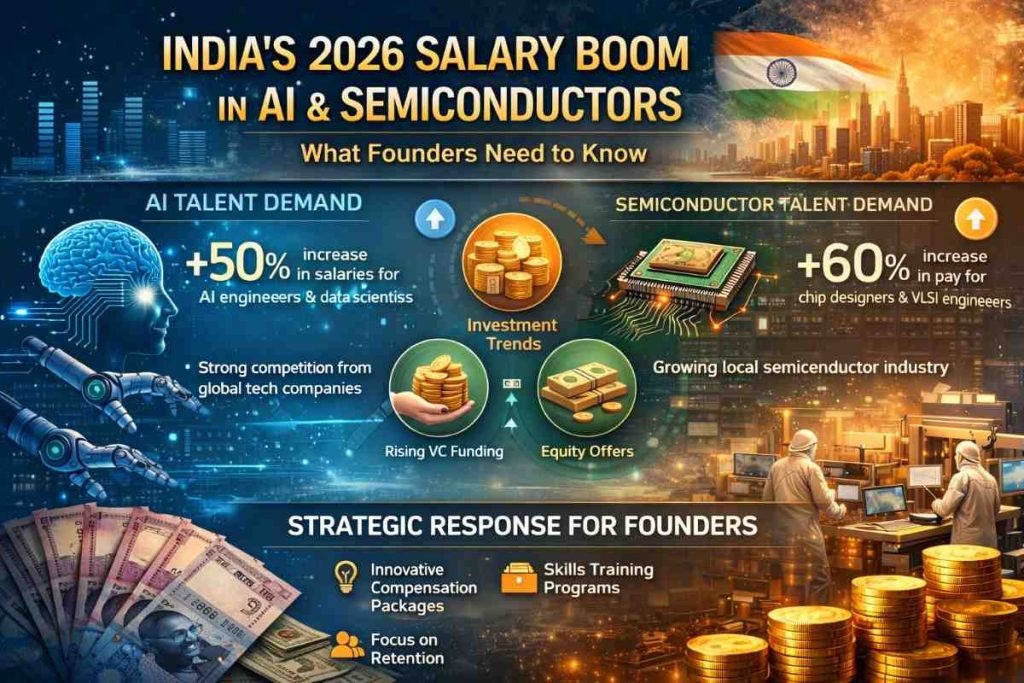
This surge in demand has led to salary levels that were unimaginable just a few years ago. Senior AI engineers are commanding compensation packages comparable to product leads, while semiconductor specialists are being offered equity stakes that mirror founder-level incentives. The competition is not limited to traditional tech hubs; tier-2 and tier-3 cities are increasingly becoming battlegrounds as remote work enables access to global opportunities.
The drivers behind this trend are multifaceted. Global technology companies are establishing R&D centers in India, drawn by both cost advantages and the availability of highly skilled graduates. Venture capital investment continues to pour into AI and semiconductor startups, providing the financial means to offer premium salaries and incentives. Moreover, the limited supply of deep technical expertise makes every highly qualified professional a prized asset, creating upward pressure on compensation.
For founders, the implications are significant. Securing the right talent now requires more than just matching market salaries. Equity-based compensation, performance-linked incentives, and flexible benefit structures are becoming essential tools for attracting and retaining skilled professionals. Beyond compensation, creating a compelling organizational culture, providing meaningful projects, and offering clear paths for career growth are increasingly important factors in building loyalty and engagement.
The salary boom also brings risks. Startups with limited funding may struggle to sustain high compensation levels, and talent volatility means that even experienced employees can be lured away by competitors offering better packages. Ensuring that hires are aligned with the company’s strategic goals is crucial, as deep technical skills do not always guarantee high-impact contributions.
Despite these challenges, the overall trajectory for India’s AI and semiconductor sectors is optimistic. Government policies, investor interest, and the country’s talent base are combining to create a robust ecosystem poised for long-term growth. Founders who adapt to this new reality—by designing strategic compensation models, nurturing internal talent, and fostering innovation-driven cultures—will be best positioned to capitalize on the opportunities that 2026 presents.
The salary boom is not merely a temporary spike; it reflects a structural shift in the Indian technology landscape. Those who understand its implications and respond with foresight and strategy will define the next generation of India’s global tech leaders.
Add startupmagazine.in as preferred source on google – Click Here
Last Updated on Tuesday, January 27, 2026 10:30 am by Startup Magazine Team
About The Author
