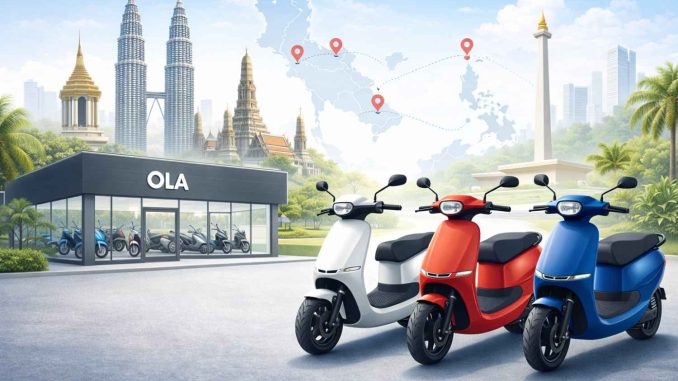
Ola Electric is set to enter the Southeast Asian market, with its first international showrooms scheduled to open in February. The move marks a major step in the company’s global expansion strategy as it looks to tap into fast-growing electric two-wheeler markets outside India.
The expansion comes at a time when demand for electric scooters is rising across Southeast Asia, driven by urban congestion, fuel prices, and government incentives for cleaner mobility.
Why This Expansion Matters
Ola Electric’s entry into Southeast Asia is a significant development for the Indian electric vehicle sector. It signals the company’s ambition to become a global EV player, rather than focusing only on the domestic market. Southeast Asia is considered a key growth region because of its large two-wheeler population and increasing interest in electric mobility. Many countries in the region have high motorcycle usage, making them ideal markets for electric scooters. By entering these markets early, Ola Electric aims to build brand presence and secure market share before global competitors scale up.
First Showrooms Planned for February
The company is expected to open its first showrooms in select Southeast Asian cities in February, marking its official retail debut in the region. These showrooms will serve as experience centres where customers can explore Ola’s electric scooters, learn about charging solutions, and test ride the vehicles. The initial rollout is expected to focus on major urban centres, where demand for electric scooters is strongest due to traffic congestion and shorter commuting distances.
Target Markets in Southeast Asia
Ola Electric is likely to focus on countries with large two-wheeler markets and supportive EV policies. These include nations where motorcycles and scooters are the primary mode of daily transport. The region offers strong growth potential because of its high urban population density, large number of two-wheeler users, rising fuel costs, government incentives for electric vehicles, and growing environmental awareness. These factors make Southeast Asia one of the most attractive EV markets globally.
Product Strategy for International Markets
Ola Electric is expected to introduce its popular electric scooter models in the new markets, with possible adjustments based on local regulations and consumer preferences. The company may focus on high-range electric scooters, fast-charging capabilities, smart connectivity features, and competitive pricing strategies. Local market conditions, road infrastructure, and charging availability will influence the final product lineup.
Manufacturing and Supply Chain Advantage
Ola Electric’s expansion is supported by its large-scale manufacturing facility in India. The company’s production capabilities allow it to supply vehicles to international markets while maintaining cost efficiency. By leveraging domestic manufacturing, the company aims to keep prices competitive, maintain quality control, scale production quickly, and meet export demand. This approach also positions India as a key hub for electric vehicle exports.
Competition in Southeast Asia
The Southeast Asian EV market is becoming increasingly competitive, with several local and international companies expanding their presence in the region. Competitors include local electric scooter startups, traditional motorcycle manufacturers, Chinese EV brands, and global two-wheeler companies. Ola Electric will need to compete on pricing, performance, range, and after-sales service to gain market share.
Focus on Charging and After-Sales Support
One of the biggest challenges in new EV markets is the availability of charging infrastructure. Ola Electric is expected to focus on building a strong charging and service ecosystem in the region. This may include partnerships with local charging providers, setting up service centres, offering home charging solutions, and providing mobile service support. A strong after-sales network will be critical to building customer trust in new markets.
Strategic Timing of the Expansion
The company’s international expansion comes at a time when global EV adoption is accelerating. Governments across Southeast Asia are introducing policies to encourage electric vehicle adoption, including tax benefits, subsidies, and infrastructure investments. By launching its showrooms in February, Ola Electric aims to capture early demand and position itself as a key player in the region’s EV transition.
Impact on Ola Electric’s Growth Plans
International expansion is expected to play a key role in the company’s long-term growth strategy. By entering new markets, Ola Electric can increase sales volumes, diversify revenue streams, reduce dependence on the domestic market, and strengthen its global brand. This move could also improve the company’s position ahead of any future fundraising or public listing plans.
Challenges Ahead
Despite strong growth potential, the expansion into Southeast Asia comes with several challenges. The company will need to navigate different regulatory environments, import duties, and local market conditions. Building brand recognition in new countries may take time, especially in markets where established motorcycle brands already dominate. Charging infrastructure in some regions may still be limited, which could affect customer adoption. In addition, the company will need to ensure strong after-sales service to maintain customer satisfaction.
Short-Term Outlook
In the near term, Ola Electric is expected to focus on opening its first showrooms, building local partnerships, and testing customer response in the new markets. The company may start with a limited product lineup and gradually expand based on demand. Pilot launches in major cities will likely serve as a testing ground before a broader regional rollout.
Long-Term Strategy
Over the long term, Ola Electric may aim to build a strong presence across multiple Southeast Asian countries. This could include expanding showroom networks, building regional distribution hubs, and possibly setting up local assembly or manufacturing facilities. The company may also introduce new models designed specifically for international markets, depending on customer preferences and regulatory requirements.
What to Watch Next
Market observers will be watching the launch of the first showrooms in February, customer response in the new markets, expansion into additional countries, and the company’s ability to build charging and service networks. The success of this expansion could shape Ola Electric’s global growth strategy.
Bottom Line
Ola Electric’s entry into Southeast Asia marks a major step in its international expansion plans. With its first showrooms set to open in February, the company is aiming to tap into one of the world’s largest two-wheeler markets.
If the expansion succeeds, it could help Ola Electric grow beyond India, build a global brand, and strengthen its position in the fast-growing electric mobility sector.
Last Updated on Friday, February 6, 2026 8:46 pm by Startup Magazine Team
About The Author
