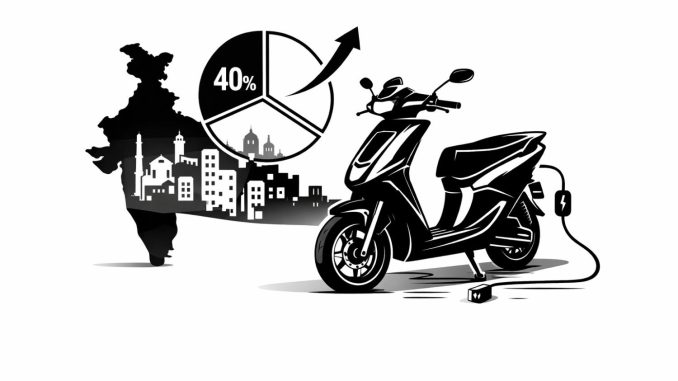
Electric two-wheeler maker Ola Electric says it has captured nearly 40% market share in Tier-3 cities, even as government subsidies for electric vehicles continue to decline.
The company’s claim highlights a major shift in India’s electric mobility story. Growth is no longer limited to big metros. Smaller cities and towns are now driving demand, showing that electric scooters are becoming mainstream across the country.
Ola Electric Reports 40% Share in Tier-3 Markets
Ola Electric says it now holds around 40% market share in Tier-3 cities.
These are smaller urban centres that typically have lower population than metros and Tier-1 cities, rising middle-class incomes, and growing demand for affordable mobility. The company says this strong presence in smaller cities has helped offset the impact of reduced government incentives.
Why the Tier-3 Market Matters for EV Growth
Tier-3 cities represent a massive opportunity for electric vehicle adoption.
They have a large population base, high dependence on two-wheelers, lower daily travel distances, and rising fuel costs. In many smaller towns, two-wheelers are the primary mode of transport. This makes electric scooters an attractive option, especially as petrol prices remain high.
Growth Despite Reduction in EV Subsidies
The company’s reported market share comes at a time when government subsidies for electric two-wheelers have been reduced.
Over the past year, central subsidies under EV schemes have been cut, and state incentives have been revised or withdrawn in some regions. Prices of some electric scooters have also increased. Despite this, demand in smaller cities has remained strong. Industry observers say this shows that electric vehicles are becoming viable even without heavy subsidies.
Factors Driving Ola’s Success in Smaller Cities
Several factors have helped Ola Electric expand in Tier-3 markets.
1. Competitive Pricing Strategy
Ola has focused on keeping entry-level scooter prices competitive. Affordable variants have made electric scooters more accessible to price-sensitive customers in smaller towns.
2. Expansion of Sales and Service Network
The company has expanded its experience centres, service hubs, and delivery networks. This has helped improve trust among customers in non-metro areas.
3. Lower Running Costs Compared to Petrol Scooters
Electric scooters typically have lower fuel costs, fewer maintenance requirements, and reduced servicing expenses. These factors are especially important for customers in smaller cities who are highly price-conscious.
Shift in EV Demand from Metros to Smaller Cities
In the early years of India’s EV adoption, most demand came from large cities such as Bengaluru, Delhi, Mumbai, and Hyderabad.
However, the trend is now changing. Industry data shows that a growing share of EV sales is coming from Tier-2 and Tier-3 cities. Smaller towns are adopting electric two-wheelers at a faster pace, and demand is spreading beyond early adopters. This shift is helping electric vehicle companies reduce dependence on metro markets.
Ola Electric’s Product Line and Strategy
Ola Electric currently offers multiple electric scooter models across different price segments.
Its strategy includes offering entry-level models for price-sensitive buyers, premium variants with advanced features, software updates and connected features, and a direct-to-consumer sales model. The company has also invested heavily in manufacturing and battery technology.
Manufacturing and Localisation Efforts
Ola has been building a large-scale manufacturing ecosystem in India.
Its focus areas include local battery production, component localisation, and in-house technology development. These steps are aimed at reducing costs and improving supply chain control. Lower manufacturing costs could help the company maintain competitive pricing even without subsidies.
Challenges Facing the EV Industry
Despite strong growth, the electric two-wheeler sector still faces several challenges.
These include reduced government subsidies, price sensitivity among customers, charging infrastructure gaps in smaller towns, and rising competition among manufacturers. Companies will need to balance pricing, technology, and customer experience to sustain growth.
Competition in the Electric Two-Wheeler Market
Ola Electric operates in a highly competitive market.
Key rivals include TVS Motor, Bajaj Auto, Ather Energy, and Hero Electric. Many traditional automakers are increasing their presence in the electric scooter segment. This competition is expected to intensify in the coming years.
What the 40% Market Share Claim Indicates
If the 40% Tier-3 market share claim holds, it suggests several key trends.
It indicates that electric scooters are gaining acceptance beyond major cities, customers in smaller towns are willing to adopt EVs even without heavy subsidies, and companies with strong distribution and service networks in these areas may gain a competitive advantage.
Impact on India’s EV Adoption Goals
India has set ambitious targets for electric mobility adoption.
Two-wheelers are expected to lead the transition because they make up the majority of vehicle sales, are easier to electrify than cars, and are widely used in smaller cities. Strong adoption in Tier-3 markets could accelerate the country’s overall EV growth.
What Customers in Smaller Cities Are Looking For
Customers in Tier-3 markets typically prioritise affordability, low running costs, reliable service support, and durable products.
Companies that meet these needs are more likely to succeed in these regions.
Key Numbers to Know
Ola Electric claims 40% market share in Tier-3 cities. The growth comes despite reductions in government EV subsidies over the past year. Smaller cities are now emerging as a major driver of electric two-wheeler demand.
The Bottom Line
Ola Electric’s reported 40% market share in Tier-3 cities shows that electric scooters are gaining traction beyond major urban centres.
The growth, even after subsidy cuts, suggests that the EV market is becoming more sustainable and less dependent on government incentives. As demand shifts to smaller towns, companies that focus on affordability, service networks, and local manufacturing are likely to lead the next phase of India’s electric mobility journey.
Disclaimer: The information presented in this article is intended for general informational purposes only. While every effort is made to ensure accuracy, completeness, and timeliness, data such as prices, market figures, government notifications, weather updates, holiday announcements, and public advisories are subject to change and may vary based on location and official revisions. Readers are strongly encouraged to verify details from relevant official sources before making financial, investment, career, travel, or personal decisions. This publication does not provide financial, investment, legal, or professional advice and shall not be held liable for any losses, damages, or actions taken in reliance on the information provided.
Last Updated on Wednesday, February 11, 2026 2:25 pm by Startup Magazine Team
About The Author
