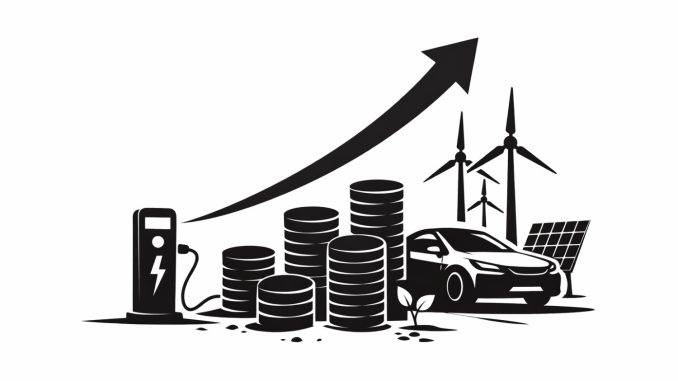
Clean Mobility and Climate Innovation Attract Long-Term Investors
Electric vehicle (EV) and climate tech startups are drawing steady strategic capital in 2026, even as global venture funding remains selective. Investors are focusing on long-term sustainability themes such as clean mobility, battery technology, renewable energy, and carbon reduction solutions.
This matters for India because the country is pushing hard on its climate goals and energy transition plans. The shift toward electric mobility and low-carbon technologies is not just an environmental issue. It is also a major economic opportunity.
Strategic capital in this space signals confidence in India’s green growth story.
Why 2026 Is Important for EV and Climate Tech Funding
The funding environment in 2024 and 2025 saw tighter global liquidity and cautious venture capital flows. Many startups struggled to raise fresh rounds. However, climate tech and EV-focused companies continued to attract interest due to long-term policy support and global climate commitments.
In 2026, the trend has become clearer. Investors are now more focused on:
- Profitability and unit economics
- Strong supply chains
- Scalable technology
- Government-aligned business models
Rather than quick growth at any cost, funding is now more strategic.
India’s Policy Push Driving Investor Confidence
India has committed to ambitious clean energy goals, including expanding renewable capacity and increasing EV adoption. Central and state governments have introduced policy support such as:
- Production-linked incentives (PLI) for advanced battery manufacturing
- Faster Adoption and Manufacturing of Electric Vehicles (FAME) scheme
- State-level EV subsidies and road tax benefits
Such policies reduce risk for investors.
Companies aligned with national priorities are more likely to attract long-term capital.
Major Indian Players in the EV Ecosystem
Several Indian companies have built strong EV platforms in recent years. These include:
- Tata Motors
- Mahindra & Mahindra
- Ola Electric Mobility
While these are established names, a new wave of startups is working across the EV value chain.
These startups focus on:
- Battery management systems
- EV charging infrastructure
- Fleet electrification
- Energy storage solutions
Strategic investors are backing companies that solve core infrastructure challenges.
Battery Technology at the Center of Investment
Battery innovation remains a key focus in 2026.
India is aiming to reduce dependence on imported battery cells. Companies involved in cell manufacturing, recycling, and alternative chemistries are attracting attention.
Startups working on:
- Lithium-ion cell assembly
- Battery swapping models
- Recycling of used EV batteries
are seen as critical for long-term growth.
Investors prefer businesses that improve energy density, reduce costs, or increase battery life.
Climate Tech Beyond Electric Vehicles
Climate tech is not limited to EVs.
In 2026, capital is flowing into startups focused on:
- Solar energy software
- Green hydrogen research
- Carbon accounting platforms
- Energy efficiency solutions for industries
Climate-focused funds are looking at companies that help industries reduce emissions.
This includes data-driven tools that help businesses measure and report carbon output.
As more Indian companies commit to ESG reporting standards, demand for such tools is rising.
Global Investors Returning Selectively
International investors have become more selective but remain active in climate-related themes.
Global climate funds and impact investors see India as a large market with:
- Rising urbanisation
- Growing middle-class demand
- High energy needs
- Strong digital adoption
These structural drivers make India attractive for climate innovation.
However, funding rounds now come with stricter due diligence and performance benchmarks.
Strategic Capital vs Pure Venture Capital
A key trend in 2026 is the rise of strategic capital.
This includes investments from:
- Large automotive companies
- Energy corporations
- Infrastructure firms
- Sovereign funds
Strategic investors often bring industry expertise, supply chain access, and long-term partnerships.
For startups, this is often more valuable than short-term funding.
In many cases, corporate investors are looking to secure technology access rather than quick financial returns.
EV Charging Infrastructure Gains Attention
One of the biggest gaps in India’s EV ecosystem is charging infrastructure.
Startups building public charging networks, software platforms, and fast-charging solutions are drawing capital.
Urban cities are seeing expansion of charging stations in malls, highways, and office complexes.
Investors see this segment as essential for scaling EV adoption beyond early adopters.
Without strong charging networks, passenger EV growth may slow.
Fleet Electrification Becomes a Focus Area
Commercial fleets are emerging as a strong use case for EVs.
Logistics companies and ride-hailing platforms are gradually shifting toward electric fleets.
This has created opportunities for startups that provide:
- Fleet management software
- Charging solutions for fleet operators
- Financing models for EV adoption
Fleet electrification offers predictable demand and faster adoption cycles.
This makes it attractive for investors looking for stable revenue models.
Green Hydrogen and Industrial Decarbonisation
India has also announced plans to expand green hydrogen production.
Startups working on hydrogen electrolyzers and storage technology are gaining visibility.
Industrial decarbonisation is becoming a priority for sectors like steel, cement, and chemicals.
Climate tech startups that help reduce industrial emissions are drawing serious investor attention in 2026.
These solutions are complex and capital-intensive, but they align with long-term policy goals.
Profitability Now Matters More Than Growth
In earlier years, startups often focused on rapid expansion.
In 2026, investors are prioritising:
- Clear revenue visibility
- Controlled cash burn
- Strong governance
- Real demand validation
Startups that show a path to profitability are finding it easier to raise funds.
The funding market is no longer driven by hype.
Challenges Facing EV and Climate Startups
Despite positive funding trends, challenges remain.
These include:
- High capital requirements
- Global supply chain risks
- Raw material price volatility
- Regulatory changes
Battery raw materials like lithium and nickel are globally traded commodities. Price swings can impact cost projections.
Climate startups must also comply with evolving environmental standards.
Investors are factoring in these risks before committing capital.
Role of Public Markets and IPO Expectations
Public market performance also affects funding sentiment.
When listed EV-focused companies perform well, it boosts confidence in private markets.
Strong market performance by companies such as Tata Motors often influences investor appetite for related startups.
However, IPO markets remain selective. Only startups with strong financials are expected to consider listing.
India’s Long-Term Climate Opportunity
India is one of the world’s fastest-growing large economies. Energy demand will continue to rise.
This creates a major opportunity for:
- Clean mobility
- Renewable energy storage
- Smart grid technologies
- Sustainable urban mobility
Investors view climate tech not just as an environmental theme, but as a long-term economic transformation.
The next decade will likely see deeper integration between digital technology and clean energy.
Why This Matters for Indian Investors and Entrepreneurs
The rise in strategic capital signals maturity in the ecosystem.
For entrepreneurs, it means:
- Higher expectations
- More structured funding rounds
- Stronger focus on execution
For investors, it means opportunities in companies solving real infrastructure and energy problems.
Retail investors tracking climate themes should also understand that this is a long-term transition story.
Short-term volatility may continue, but structural drivers remain strong.
Conclusion
In 2026, EV and climate tech startups in India are attracting strategic capital despite a cautious global funding climate.
The shift from hype-driven funding to disciplined investment marks a new phase for the sector.
With policy support, rising energy demand, and growing climate awareness, the green technology ecosystem continues to expand.
Electric mobility, battery innovation, charging infrastructure, and industrial decarbonisation are at the centre of this capital flow.
For India, this is not just about startups. It is about building the foundation for a cleaner and more resilient economy.
As funding trends evolve through the year, EV and climate tech companies will remain among the most closely watched sectors in India’s innovation landscape.
Disclaimer: The information presented in this article is intended for general informational purposes only. While every effort is made to ensure accuracy, completeness, and timeliness, data such as prices, market figures, government notifications, weather updates, holiday announcements, and public advisories are subject to change and may vary based on location and official revisions. Readers are strongly encouraged to verify details from relevant official sources before making financial, investment, career, travel, or personal decisions. This publication does not provide financial, investment, legal, or professional advice and shall not be held liable for any losses, damages, or actions taken in reliance on the information provided.
Last Updated on Tuesday, February 24, 2026 11:22 am by Startup Magazine Team
About The Author
