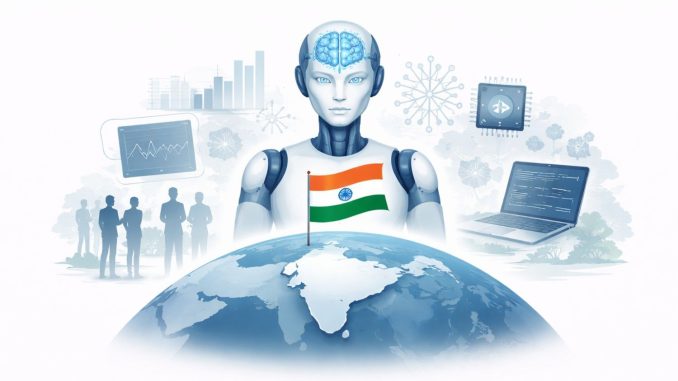
Renewed Investor Interest Signals Momentum for India’s AI Sector
India’s artificial intelligence startup ecosystem is witnessing renewed funding interest, as global venture capital firms and technology investors return to the market after a period of cautious investment.
The shift reflects growing confidence in India’s digital economy and the rising global demand for AI-driven solutions across industries such as healthcare, finance, logistics, and enterprise software.
Several investment firms are again looking at Indian startups building products in areas like machine learning, data analytics, automation, and generative AI. The revival comes as global investors seek opportunities in emerging technology markets with strong engineering talent and expanding digital infrastructure.
For India’s technology ecosystem, this trend could accelerate innovation and support the next generation of AI-led companies.
India’s AI Startup Ecosystem Continues to Expand
India has steadily become one of the largest startup ecosystems in the world. Artificial intelligence is now among the fastest-growing sectors within that ecosystem.
Startups are developing AI applications across multiple industries, including:
- Healthcare diagnostics
- Financial technology
- Retail analytics
- Supply chain optimisation
- Cybersecurity tools
Companies such as Fractal Analytics, Haptik, and Uniphore represent the type of businesses that have helped position India as an important AI innovation hub.
Many of these companies are building products used by global enterprises, which has helped attract international investor attention.
Why Global Investors Are Returning
After a slowdown in venture capital activity in recent years, several factors are encouraging investors to re-enter the Indian AI startup market.
1. Growing Global Demand for AI Solutions
Artificial intelligence has become central to digital transformation strategies for businesses worldwide. Companies are increasingly adopting AI tools for automation, data analysis, and customer engagement.
This demand is creating opportunities for startups that can deliver scalable AI solutions.
2. India’s Strong Technology Talent Pool
India produces a large number of engineering and computer science graduates every year. Many of them work in fields such as machine learning, cloud computing, and data science.
This talent advantage allows startups to build advanced technology products at competitive costs.
3. Expanding Digital Infrastructure
Government initiatives such as Digital India have strengthened the country’s digital ecosystem.
Public digital platforms like Aadhaar, UPI, and other digital services have created large datasets and digital infrastructure that support innovation in AI and analytics.
4. Enterprise Adoption of AI
Businesses across sectors are increasingly integrating AI tools into their operations.
From automated customer support to predictive analytics in retail and finance, AI applications are expanding quickly. This trend has improved the commercial potential of startups working in the field.
Investment Trends in the AI Startup Sector
Investors are currently focusing on startups that offer practical AI applications rather than experimental technologies.
Key areas attracting funding include:
Enterprise AI Platforms
Startups building software for businesses to analyse data, automate processes, and improve decision-making are drawing strong interest.
Conversational AI
Companies developing voice assistants, chatbots, and automated customer support systems are seeing growing demand.
For example, conversational AI platforms like Haptik have been widely adopted by companies looking to improve customer engagement.
AI for Healthcare
Healthcare startups using artificial intelligence for diagnostics and medical imaging analysis are gaining attention from investors and hospitals.
Cybersecurity and Risk Detection
AI tools that identify fraud, cyber threats, and abnormal behaviour in digital systems are also becoming important as businesses expand online.
Role of Global Venture Capital Firms
International venture capital firms have historically played a major role in funding India’s technology startups.
These firms bring:
- Capital for scaling products
- Global business networks
- Experience in building technology companies
As AI becomes a priority technology worldwide, many venture funds are now creating specialised investment strategies focused on AI startups.
India is seen as an attractive destination because of its combination of talent, cost advantages, and market potential.
Government Policy and AI Development
Government policies have also supported the growth of AI innovation in India.
Several initiatives aim to strengthen the country’s position in emerging technologies.
Programs supporting research, skill development, and digital infrastructure have created a favourable environment for startups.
Institutions working on artificial intelligence research and collaboration between universities and technology companies are also contributing to ecosystem growth.
While the private sector leads most AI development, policy frameworks play a supporting role in encouraging innovation.
Challenges Facing AI Startups
Despite renewed investor interest, AI startups in India still face several challenges.
Access to Large-Scale Computing Resources
Training advanced AI models often requires high-performance computing infrastructure. Startups may need significant investment to access such resources.
Data Availability and Privacy
Artificial intelligence systems rely heavily on data. Companies must ensure that data usage complies with privacy regulations and ethical standards.
India’s Digital Personal Data Protection Act, 2023 has introduced new requirements for data handling and protection.
Global Competition
Indian startups compete with companies from the United States, Europe, and other technology hubs.
To succeed internationally, they must deliver high-quality products and maintain strong technological innovation.
How Indian AI Startups Are Building Global Products
Many Indian AI startups are focusing on solving global business problems rather than limiting their products to local markets.
Enterprise software, automation platforms, and analytics tools developed in India are often sold to international clients.
Companies like Fractal Analytics and Uniphore have demonstrated that Indian AI firms can compete globally.
This international orientation makes startups more attractive to investors who seek scalable businesses.
The Role of Large Technology Companies
Major technology companies are also investing heavily in artificial intelligence research and infrastructure.
Cloud platforms, machine learning tools, and developer frameworks created by large firms make it easier for startups to build AI applications.
These partnerships between startups and large technology providers are helping accelerate product development.
Access to cloud computing services allows startups to test and deploy AI solutions without investing heavily in physical infrastructure.
AI Startups and the Future of India’s Digital Economy
Artificial intelligence is expected to play a major role in India’s digital economy over the coming decade.
AI applications could improve efficiency in sectors such as:
- Healthcare
- Agriculture
- Financial services
- Manufacturing
- Logistics
Startups will likely be a key driver of innovation in these sectors.
By developing practical solutions to real-world problems, AI startups can contribute to economic growth and technological advancement.
Key Highlights of the Funding Revival
- Global investors are showing renewed interest in Indian AI startups
- Demand for AI-driven business solutions continues to grow
- India’s technology talent pool remains a major advantage
- Enterprise AI, healthcare AI, and conversational AI are attracting funding
- Startups are increasingly building products for global markets
Conclusion: A New Phase of Growth for Indian AI Startups
The renewed funding activity signals growing confidence in India’s artificial intelligence ecosystem.
As global demand for AI technologies expands, startups in India are well positioned to develop products that serve both domestic and international markets.
Companies like Fractal Analytics, Haptik, and Uniphore highlight the type of innovation emerging from the country’s technology sector.
While challenges remain, the return of investor interest suggests that India’s AI startup ecosystem may be entering a new phase of growth.
For entrepreneurs, investors, and policymakers, the coming years will be critical in shaping how India positions itself in the global artificial intelligence landscape.
Disclaimer: The information presented in this article is intended for general informational purposes only. While every effort is made to ensure accuracy, completeness, and timeliness, data such as prices, market figures, government notifications, weather updates, holiday announcements, and public advisories are subject to change and may vary based on location and official revisions. Readers are strongly encouraged to verify details from relevant official sources before making financial, investment, career, travel, or personal decisions. This publication does not provide financial, investment, legal, or professional advice and shall not be held liable for any losses, damages, or actions taken in reliance on the information provided.
Last Updated on Thursday, March 5, 2026 6:13 pm by Startup Magazine Team
About The Author
